Saturday, 23 February 2013

Uterus removed by mafia doctors?


Prem
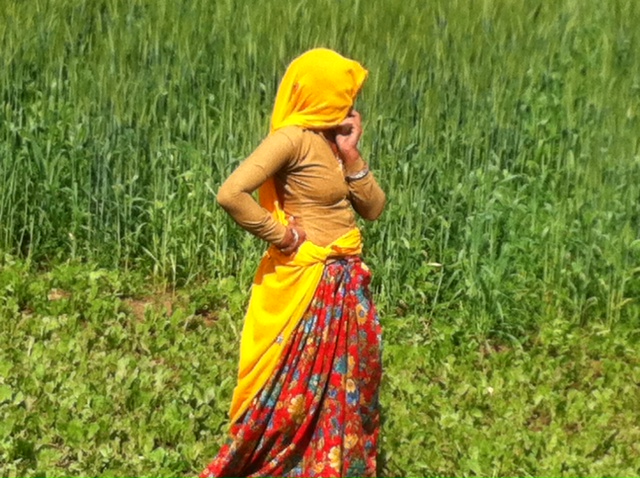
As we travel 250 kilometers south of Delhi into the colourful state of Rajasthan, the colours become obvious: we drive through the lush green fields of countryside. From a distance, the fields seem to be sprinkled with colours. As we move closer, we see women working in the fields - clad in bright yellow and orange.

We stop in a village where peace and tranquility seem to be the order – it’s serene and pristine. We see women pumping water from tube-wells, men sitting on wooden string beds smoking hookah on the front yard, buffalos gazing lazily. Little can one imagine that behind the serenity, a silent crime against women were systematically committed.

We meet Prem Devi – a woman in her late thirties. She narrates how her uterus was removed from her body: “I had a pain in my stomach. I went to the nearest town to a private doctor. They told me that I have cancer, and said if my uterus is not removed, I will die. I was nervous.I was asked to organize Rs15000 (around $300) and get admitted as soon as possible. I borrowed the money and underwent an operation.’

She complains her pain never subsided after the surgery. Occasionally, she has swollen eyes, which she blames on the operation that she believes she was duped into.

She says: ‘ there was nothing wrong with my uterus. The doctors simply wanted to make money. We are poor people, we trusted them, we no longer trust doctors.’  

Like Prem, hundreds of women were forced into hysterectomy in the area by the private doctors in order to make some quick money.

A local lawyer and consumer right activist Mr Durga Prasad Saini from the neighboring Dausa first raised the matter with the authorities. He shows us hospital reports that he demanded from the five local hospitals under India’s right to information act.  We notice that almost 90 % of the surgeries were that of hysterectomy.


Failing public health service


Mr Saini tells that the private hospitals in the area mainly targeted women from four back ward castes. These women, he says, are illiterate and poor. The private hospitals mainly employ people of the targeted communities, who act as agents in the villages or sometimes even act as local doctors. When a woman complains about an illness, these agents direct them to the district hospitals. He calls it a ‘scandal’ run by ‘mafia doctors’.

A local journalist tells us that that the government hospitals don’t have any gynecologist, so women are forced to go the more expensive but better equipped private hospitals.

Mr Saini further tells is that until last year there was no law in Rajasthan to control the ever-mushrooming private clinics, but now the government has enacted a clinical establishment law to check the private clinics.

We speak to doctor R K Dhakar, owner of Madhur hospital in Bandikwe. His hospital has been accused of carrying out large number of surgeries. It is also one of the hospitals that refused to give out any information about the surgeries they conduct under the right to information act.

we join local men to smoke hookah 
Dr Dhakar refutes the allegation. He points out that the private health care is needed because public health care systems don’t have the infrastructure or doctors.

He says that the allegations are ‘politically motivated’ as the right to information was filed by a man who can’t even write.  We attempt to speak to another hospital but the doctor there refused to meet us.

Back in the village we ask the men about the situation of their women, who seems to be doing all the hard work, whist they simply smoke hookah.

They laugh and tell me “We go around in the bikes, smoke hookahs and love politics- we don’t do any work, we are men.”


Saturday, 9 February 2013

No dawn for the midnight’s children


Deepa Mehta's adaption of Salman Rushdie’s Midnight’s Children gives a panoramic view of the troubled history of the sub-continent. Central to the film’s theme are the less privileged children born on that fateful day on the stroke of midnight when India was born. 

Though the fate of this country has changed over the last six decades; the fate of millions of poor Indian children remain unchanged. India is a home to the world’s largest malnourished children, and the country has desperately failed to provide safety and security to its children.

In the recent Delhi gang rape case, there is debate about the handing out harsher punishment to one of the rapists, who is a minor. Many have appealed for making an exception to the case and urged not to treat the convict as a juvenile. Child activist Nicole Rangel writing in The Hindu has passionately argued that the minor rapist must be given a chance to rebuild his life. Whilst his crime is horrendous, it also must be noted that we as a nation failed to protect his childhood. She notes that he has had ‘no interface with the state’, and he has never been given an opportunity to aspire for a different life. She asks should he be given a chance for reformation?

The answer is ‘yes’.  By reforming him and by inducting him into the main stream he could, potentially, in the future be instrumental in showing the right path to many other poor children living in depravity. His reformation process should be a long and well worked out process. It should be a part of a larger investment to create effective systems to safe guard children in India.

On the other hand, taking care of our children is the not responsibility of the government alone. The civil society also has a duty. In India, most middle class families employ domestic workers. For those who are well -off should try and invest in the education of the children of the people they employ.

Bringing in a law to that effect for domestic workers’ rights may be a dream, but the people of India, who have been rightly demanding for greater security of women following the Delhi gang rape, have also the moral responsibility to fix the society.  Innovative measures like tax rebate by the government for a family that pays for the welfare of the children of the people they employ at home could act an inducement.

The poor in this country, especially the children need our help. It is a mammoth task but the ripples of change can be created if the civic society, the government and the NGOs join hands. Hanging a minor is not an answer. If criminals in this country can be politicians, why should a minor be deprived be change to reform? We owe him this for a better future for this country.


Friday, 5 October 2012

Citizens of a mighty country called Facebook


Facebook now has one billion users every month. If it was country it would have been the third most populous in the world. The company says that those billion users were to date responsible for 1.13 trillion "likes", 219 billion photos and 17 billion location check-ins. How has it affected our lives?

On an average, I spend almost around 30 minutes on Facebook every day. I access it both on PC and on my smart phone. Since 2008, on a conservative estimate, I might have spent around 3000 hours doing something or the other on Facebook.  Being in the profession of media and communications, at one point, my job required me to engage only with social media tools. While at University in Scotland I actively used Facebook for recreation, heated debates and intellectual stimulation.

This is just me. Most of you who might be reading this could be spending (unknowingly) a similar amount of time on Facebook.  Depending upon the purpose you are using Facebook (and other social media tools) for you might say: ‘that’s really an awful amount of time – I just didn’t realise it.'

Many of us also suffer from Facebook syndrome. How many times have you sat in front of computer just to type facebook.com even when you didn’t want to visit the site? And what do you have to say when you hear that riot police in Netherlands were forced to break up crowds at a teenager’s 16th birthday party after 3,000 people turned up because she left the Facebook event invitation open!

In a nutshell, Facebook is a part and parcel of our life. Appealing to people of all age groups, Facebook not only serves as an interactive one-stop platform that enables someone to share messages and photos with their friends; it is also becoming a powerful media tool for citizen journalism, allowing people to express their opinions on a scale that has been unprecedented in human history.

During the Egyptian revolution in 2011,  Wael Ghonim, the Egyptian-born Google marketing executive, who first played a role in organising the opposition through Facebook, told the American audiences that without Facebook and( Twitter) their revolution ‘would never have happened.’   

For businesses and brands, Facebook enables them to directly get in touch with their core customers. It helps them to create communities, and brands such as Starbucks have more than 300,000 people following or liking them.  Whilst some see Facebook as an informal way to reach key buyers, others see it as their prime marketing tool. Brands today are increasing creating their Facebook page, and luring people to ‘like’ their pages to create brand loyalty.

Probably, in the years to come, Facebook can go beyond just being a social media tool.  It might want to integrate host of media platforms under one umbrella (which it already does to an extent) and charge subscription rates for its services.  Facebook can make available premium on-demand media content at very negligible price given its reach and ability create buzz.On the other hand, it might want the companies to pay an access charge to its billion plus users. It is often noticed that consumers are more convinced about a brand when they hear or see it on Facebook.

Facebook needs to have a business model where it can charge businesses for hosting their pages, and work more innovatively to penetrate in to the new emerging markets. Facebook has a massive data about each user. Without violating the privacy regulations, it can take permission from the users to display content or links of things that the user is interested in. 

A McKinsey report on mobile –internet revolution points out that  more than  70 percent of India’s urban consumers already spend about $1 a month on content and services through offline, unorganized retail channels—a market estimated to be worth more than $4 billion annually. Much of India’s young population loves to download videos and music, but not everyone is affluent or well educated. Due to their illiteracy or poor English they might not necessarily have the luxury of using an interactive tool. Facebook might want to pop out of the computer screens and develop tools that are easy to access and use. It might also contribute to areas like e-learning and beyond.

Over the years, Facebook has been offering the same things with a bit of tweaks.  The core strength of Facebook are its users, who patronise it and love it. Facebook has created a virtual (and largely a utopian) country. It is about time it lays the strong foundation to that country so that it can sustain itself in long run - it needs to offer us something new and more meaningful.
 

Tuesday, 2 October 2012

OH MY GOD! - my freedom of speech is safe

Bollywood’s  Oh My God! shows that satire on religions can be constructive, educative and can help balance freedom of speech with religious sentiments.


It is true that all major religions of the world have been around for centuries and millennia. They have certain values, ethos and have contributed to the global culture and development of societies around the world.  Any mockery of these epic establishments cannot really undermine them.

It is also true that religion is for people; it plays a dominant role in our societies and it is governed by the people. In many ways it is for the people, by the people (though the leaders are not always democratically elected) and is for the people. And given these virtues, religions in democratic societies should be subjected to scrutiny, criticism and satire.

However, the recent global events that saw a large scale violence across Middle East and south-Asia including a heinous murder of an American ambassador in Libya, following the release of an amateur provocative film Innocence of Muslims, has once again brought into question the legal and ethical standing of the freedom of expression particularly in relation to respect of religious beliefs.

Freedom of speech is supremely important. It is an empowerment right that allows people to demand other rights – the right to health, to food, to a clean environment to religion etc. It is a vital right and any means to curtail it is not acceptable.

Also, in a democracy (as observed by the Venice committee, instituted in 2007 by Parliamentary Assembly of the Council of Europe) religious groups must tolerate criticisms in public statements and debates related to their activities and beliefs as long as the criticism do not constitute deliberate and gratuitous insults or hate speech, an incitement to disturb public order, violence or discrimination towards people who adhere to specific religion.

Innocence of Muslims might have been extremely distasteful and provocative but it was made by some unknown person who probably has little comprehension about the greatness of any religion for that matter. The reaction that followed in the Middle- East and in Pakistan was therefore completely uncalled for.

But other actions like the repetitive publication of the images of the Prophet Mohammed by mainstream French and other European newspapers are equally needless and nasty in taste.

In this regard, the latest Bollywood film can be seen as an example to the world where a mainstream medium was used to ridicule the absurd beliefs and practices of major religions – mainly Hinduism in this context.

The film is a comedy but it critically lampoons gurus, clerics and priests for their manipulative ways to mislead and exploit people in the society. It questions the logic of religious rituals (some of which are extremist in nature) and the existence of God itself. In the film, God is taken to the court after the protagonist is denied claims by his insurance company when an earthquake damaged his property. The reason being: it was an act of God!

What was impressive about the film is that though it was very critical of the absurd religious practices, it also highlights the greatness of each religion, and quotes text from the holy books to substantiate its arguments.

Making a film on religious theme, or expressing controversial religious views in a religiously charged society like India is never easy.  Right wing groups of major religions are very active and easily resort to violence including acts of vandalism and burning of cinema halls. Oh My God! had to tread a very thin rope to drive its point and has been hugely appreciated by the Indian audience.

Most democratic societies particularly in the West have enormous cultural resources and massive pool of highly talented creative pool who are freely allowed to express their views through theatres, plays, movies, music, drama, art, sports and beyond.  Their work have greatly inspired people all over the world; it is about time that the Western intellectuals take up projects that talks about religion tolerance and liberal ideals that characterize their societies like the freedom of speech and multiculturalism. If a cartoon can sully the image of the West amongst an identifiable group of people, greater work of art can do the job of crisis management and strengthen the liberal values.

By doing so, we will be safeguarding the majority of moderate voices who were not party to the violence in the Middle-East or the American citizens who didn't approve the provocative movie on Islam.

Oh My God! does show  a middle path- the international community must learn and emulate.


Saturday, 29 September 2012

There is something sweet about Barfi


I am not really a movie buff. I haven’t watched a lot of Bollywood movies, and never really keep a track of what’s going on in world of Indian cinema.

Last week I went to see Barfi- a latest Bollywood blockbuster. I was excited to watch the movie. It's filmed in Darjeeling, a majestic hill station on the foot hills of Himalayas. I went to an Anglo- Indian boarding school there, and when I saw the trailer on the TV, the memories of the place came rolling back.   


Barfi is a celebration of love and life. The characters and the story blend with the idyllic beauty, innocence and the simple life of the people in the hills. It shows silence can be golden, and happiness is nothing but a state of mind. Humour is the essence of the movie though there is an undercurrent of something nastier in the plot.  Like the Big Ben in Virginia Wolf’s Mrs Dalloway, the chugging toy train meanders through the time reminding that whilst something in life remain constant and static, life itself has to go through some sharp curves and turns in its journey.  Life can be cruel at times but it our positive spirit that helps us to be triumphant at the end.

The movie has a message. The two central characters are physically challenged. The protagonist can’t hear or speak and the girl he eventually marries is autistic.  In a very romantic but in a subtle way the movie touches on the rights of disabled people in India. The fact that they have the right to live with dignity and they are just one of us is brilliantly illustrated in the movie.

India has 96 million people who are disabled and a vast number of them particularly in Northern India face severe discrimination and abuse. India also doesn’t really have the infrastructure that is disabled –friendly. Whilst steps are been taken to change this, Amir Khan, one of Bollywood’s super star who recently did a popular television  show aimed at making people aware of some of the serious  social problems in India says : “there are two kinds of reaction to the disabled people in India: one, that they must have done something wrong in their previous birth and therefore deserve what they got; two, let us use them as a ticket to heaven — make a donation to an organisation working for the disabled, or give money to a disabled person asking for alms, and score some brownie points with God.”

Mr Khan insisted that education is the only way out to prepare people with disabilities to be productive, look after themselves, and their families.  For this to happen people in India must change their attitudes and the mainstream educational institutes should make provisions to educate people with disabilities.

Coming back to Barfi, it is admirable that it deals with a social issue is a very creative manner. It reveals class tensions, but above all what it shows is that status, money and power cannot buy love and happiness. Simplicity has a priceless appeal and we don’t have to look far to experience the small pleasures of life. The actors convey this without any speech. Sounds unrealistic, but not when you leave the cinema with a hearty glee - this is possibly the sweetest thing about Barfi.


* Barfi is a name of an Indian sweet

Friday, 14 September 2012

The Duke, the Duchess and the media

I was among the many to gather in Central London for their grand Royal wedding. I cheered for them and prayed that they live happily and inspire millions around the world through their acts of charity, grace and influence.

Prince William and his wife Kate Middleton are majestic. They are the modern symbols of Britain’s age old royalty.  But, I wonder if they should be at the centre of international media spotlight as they have been this week.

 They are in news for two reasons: one for their tour of south East Asia, which the BBC World Service news decided to treat as a headline in all their bulletins, and secondly for the publication of sunbathing topless pictures of the Kate Middleton by the French magazine Closer.

The second incident is very unfortunate but not utterly reprehensible. For long the British royal family has been a public diplomacy tool for Britain. They represented British values to the world and in the early days of post- colonialism it was quite accepted.

Lady Diana, the princess of Wales, changed things: single handedly and in a very non –conformist way she broke with the royal protocols and campaigned for causes that really needed global attention.

Things however have changed. Prince William and Kate Middleton’s global stardom (as the BBC likes to portray) has a lot to with fashion, youth and glamour. They are like what David Beckham and Victoria are to football.

They might be going around the world as the Queen’s representative, but it is the gloss and sheen of their visits that make news.  However, the manner BBC spoke about Kate’s first public speech in Malaysia was like a parent, who rejoices hearing a child speak for the first time -a strange obsession with the princess! The news is good for Britain but don't really know how it is important for the BBC World Service audience.

The BBC must realize that in the 21st century, people are least interested in things like public diplomacy and British values. It is worth talking more about the constructive side of things like the charities they have chosen to support and the things they do which actually make a difference to the world.

Outside Britain Kate is only a celebrity. I understand that her privacy should be fully respected but she should have been bit more careful. Topless sun bathing is very much a part of European culture and to be photographed in that context is not really a big deal.

International popularity has its own down side,but I hope that more responsible media like the BBC will mellow down a bit when they talk about Britain’s beloved Duke and the Duchess of Cambridge- the title sounds very ancient indeed!


Monday, 20 August 2012

India’s ethnic tension – a kind of cyber -war

India needs to urgently brace up for the new set of internal challenges. The best solution to avoid them will be to ensure corruption free governance.

What’s happening in India is deeply unfortunate: people of north- east (mostly oriental looking) fleeing cities in southern and western India simply because of building rumour mills of ethnic violence spawned by MMS and social media tools.

Social media's potential to incite violence is not new. Last year, during the London riots, organized groups and individuals used Blackberry mobile phones and other social media tools to spread insidious messages. Elsewhere, in the Middle East during the Arab revolution, social media has been a boon to circumvent the authorities’ regulation of the media.

 But the Indian case is different in the sense that a ethnic violence along the religious lines - that should have been easily controlled by the authorities - in a remote part of the country has suddenly erupted into a nationwide crisis. The Indian Government has blamed elements in Pakistan and gone on to ban up to 250 websites suspected of adding grist to the rumours. This is possibly the first case of a new type cyber- war with an international dimension.

 But the recent events in India are alarming for a number of reasons.  It has shown that the threat of cyber –war can go beyond the wires, and can be easily used to disrupt social harmony in a country like India, where a large number of mobile phone consumers( the real targets of MMS generated rumours) may not be educated.

The radical mob that took part in vandalism in Mumbai to protest against the violence on Muslims in Assam were nothing but a group of possibly unemployed youth whose religious sentiments were fanned presumably by some extremist elements.

Likewise, most people who are fleeing the southern states are mostly migrant economic workers who have moved to the bigger cities post –globalization in search of better jobs.  People of some sections  of  north-east India have always felt alienated from the main stream because of socio-economic and political reasons. But years of insurgency and economic deprivation on the face of India’s economic growth has made them look for better opportunities in other parts of the country.


Whilst many migrated, and contributed to the of economy of the host state, what this incident has highlighted is that there is a great degree of mistrust between the people of the north –east and  the rest of country because of  a number of sometimes shallow idelogical reasons; and more importantly, the absolute apathy of the intelligentsia and the government to address these  vexed issues. It is not surprising when a foreign journalist recently said that Kabul looks like a luxury when compared with Imphal.

There are broadly few lessons for the policy makers from this incident: 
  •  Race and ethnic tensions in India are volatile. Unless there is a careful distribution of wealth including management of water and other natural resources, this could be the beginning of a new trend of ethnic violence waiting to happen.
     
  • Indian government needs to do more to check illegal migration especially from Bangladesh and protect the rights of the small tribal groups. Religious leaders should be encouraged play a more active role to preserve religious harmony.
  • There is a need for Indian state to do a bit of image management aimed at strengthening the secular credentials of the country. People of the north-east must be assured in all possible manner that they enjoy all the rights like any other citizen from other parts of the country.
  • The threat of cyber war on national security is real. Information and communication
    technology(ICT) should be used to counter the negative effects of social media. There is a need to launch a campaign to educate people about the ill effects of social media.
  • The real forces and motives of this crisis are at best open to speculation. It is really up to liberal and secular citizens to come forward and urge the people of the country to remain united against the forces that are increasingly trying to fuel religious and ethnic tensions.
India is going through a great economic and cultural revolution of unprecedented scale. It is an unequal society trying to re-orient itself with the dynamics of cultural changes sweeping the country.  At the very core, what India needs is good corruption free governance if it wishes to see itself as a force to reckon with in the 21st century.